
ABOUT THE FIRM ________
________
ABOUT THE FIRM
Risk management for the modern employer health plan.
HPX Partners is a boutique, independent health plan advisory firm helping midsized employers control rising healthcare costs by modernizing how their employee health benefits are structured, financed, and managed.
We design and implement alternatives to conventional, carrier-centered models, building transparent, adaptable, and financially sustainable benefit strategies aligned with each organization’s unique objectives.
Risk management for the
modern employer health plan.
Enterprise strategy.
Middle-market
execution.
Employer-sponsored healthcare has become one of an organization's largest and fastest-growing operating expenses. Yet many employers continue to manage it through an annual insurance renewal instead of continuously managing the underlying drivers of healthcare cost and performance.
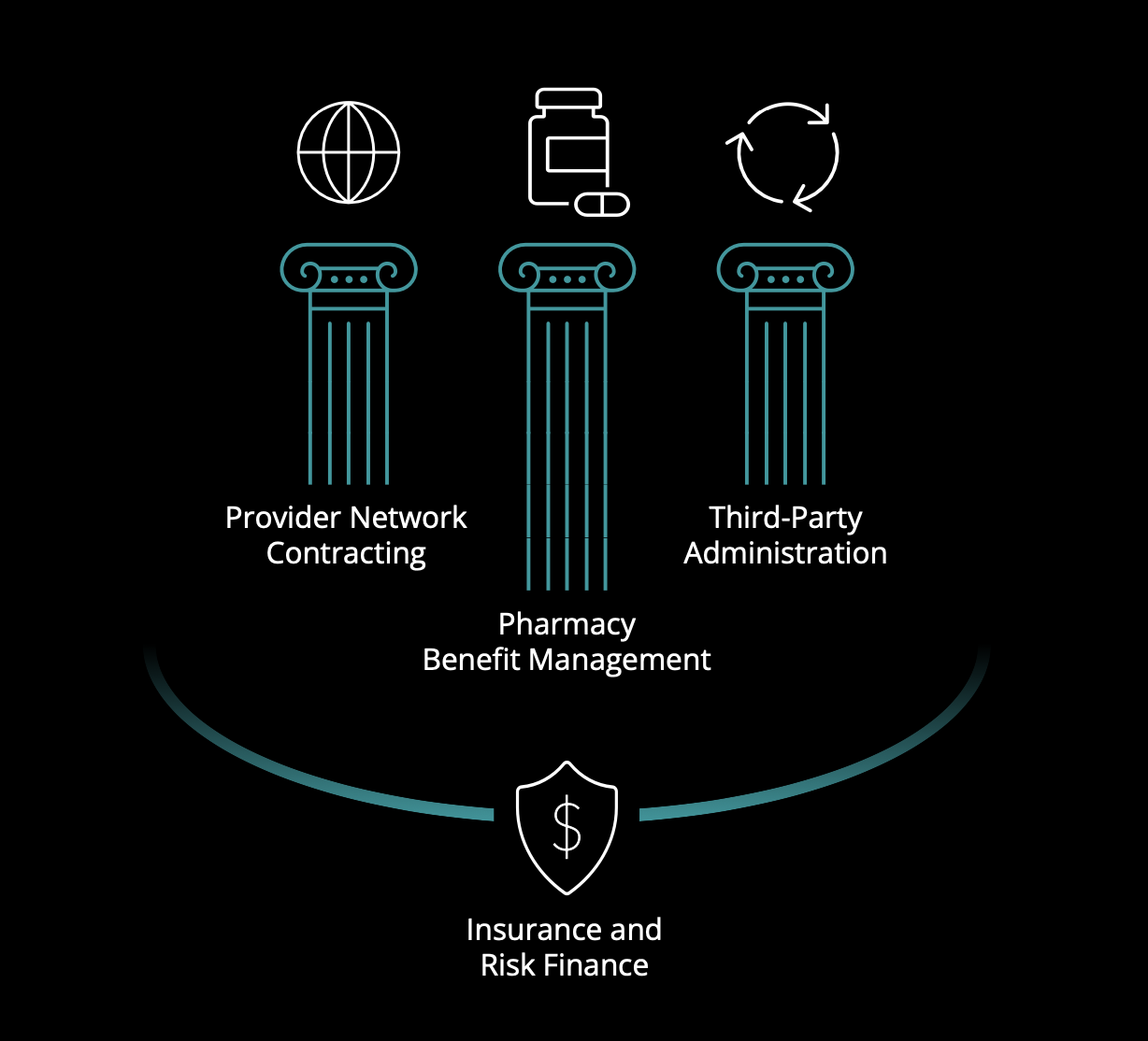
The nation's largest employers have long recognized that effective healthcare management requires optimizing both the delivery of healthcare and the financing of healthcare risk. Rather than relying on a single carrier to perform both functions, they independently align specialized partners responsible for provider access, pharmacy benefits, claims administration, and risk financing, creating greater accountability and measurable performance.
At HPX, we apply that same enterprise philosophy to the middle market, helping employers transform healthcare from a bundled insurance purchase into a disciplined, data-driven healthcare purchasing strategy.

HPX Founder & CEO, Matt Luciani
INDUSTRY OUTLOOK ________
________
INDUSTRY OUTLOOK
Limitations of carrier-bundled healthcare.
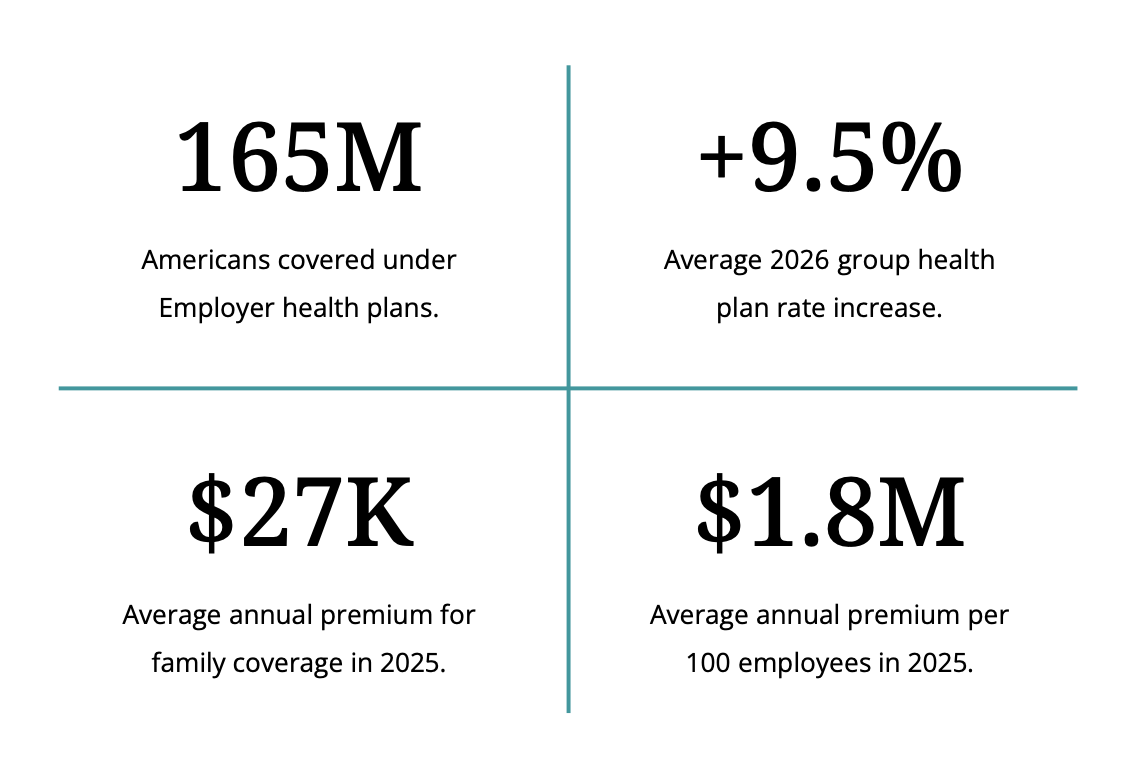
Healthcare has evolved into one of the most dynamic sectors of the global economy, with constant innovation across provider networks, pharmaceutical therapies, payment models, and care delivery. Yet many employer health plans remain built on administrative structures designed decades ago.
Traditional carrier-bundled arrangements combine two fundamentally different disciplines into a single product: healthcare purchasing and insurance financing. While operationally convenient, this structure often prevents employers from optimizing either function independently.
The result is limited pricing transparency, reduced competitive leverage, and an inability to strategically navigate today's complex healthcare marketplace.
Paradigm shift.
Paradigm Shift.
Forward-thinking employers no longer view healthcare purchasing and insurance financing as inseparable functions. Instead, they independently optimize each discipline, creating more competitive healthcare purchasing strategies and more efficient risk financing arrangements.
Advances in technology, data analytics, and specialized administration have now made many of these enterprise strategies practical for midsized employers. Organizations that once lacked the scale to customize their health plans can now access sophisticated purchasing models previously reserved for much larger plan populations.
Setting new course
to 2030 and beyond.
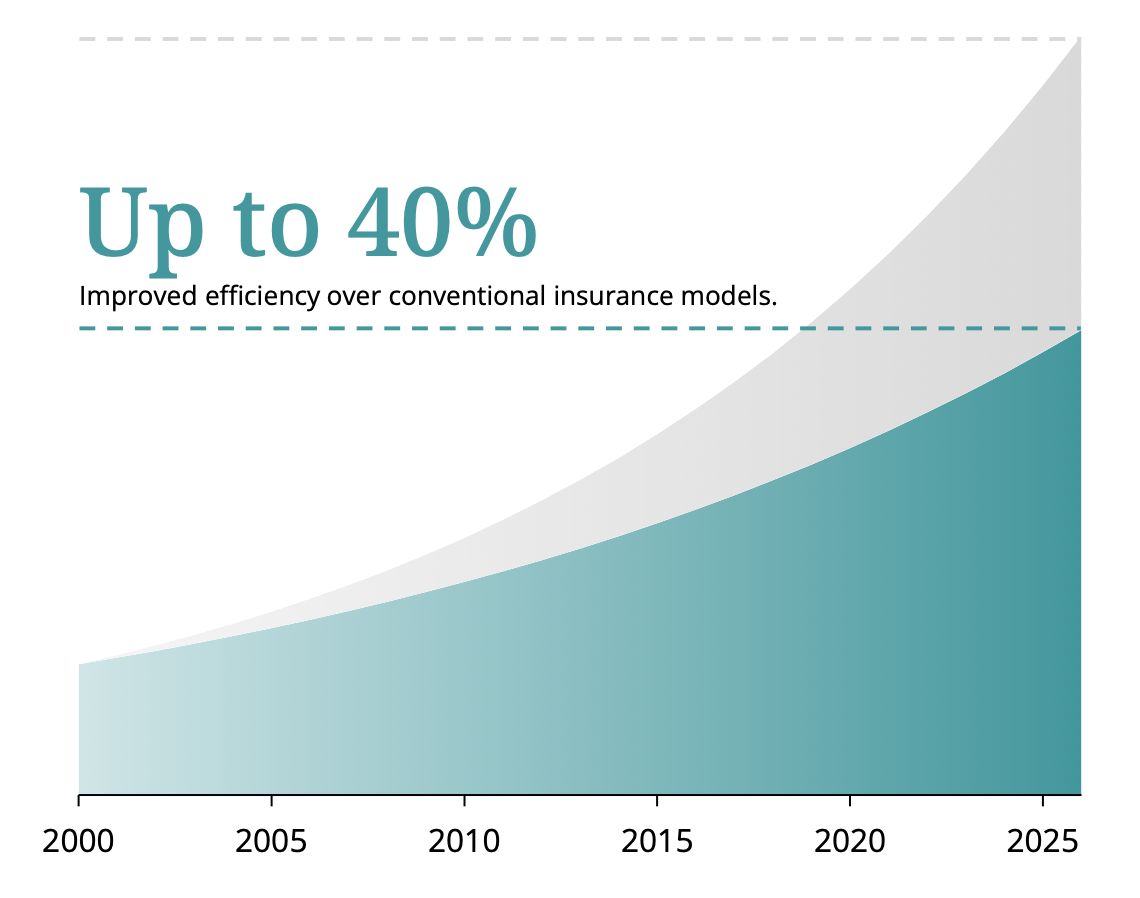
The future of employer-sponsored healthcare will be defined by organizations that optimize both how healthcare is purchased and how healthcare risk is financed. Organizations that embrace this enterprise approach will be better positioned to control long-term costs, improve workforce outcomes, and maintain competitive benefits in an increasingly complex healthcare economy.
OUR APPROACH ________
________
OUR APPROACH
Purchase
healthcare first.
Finance risk second.
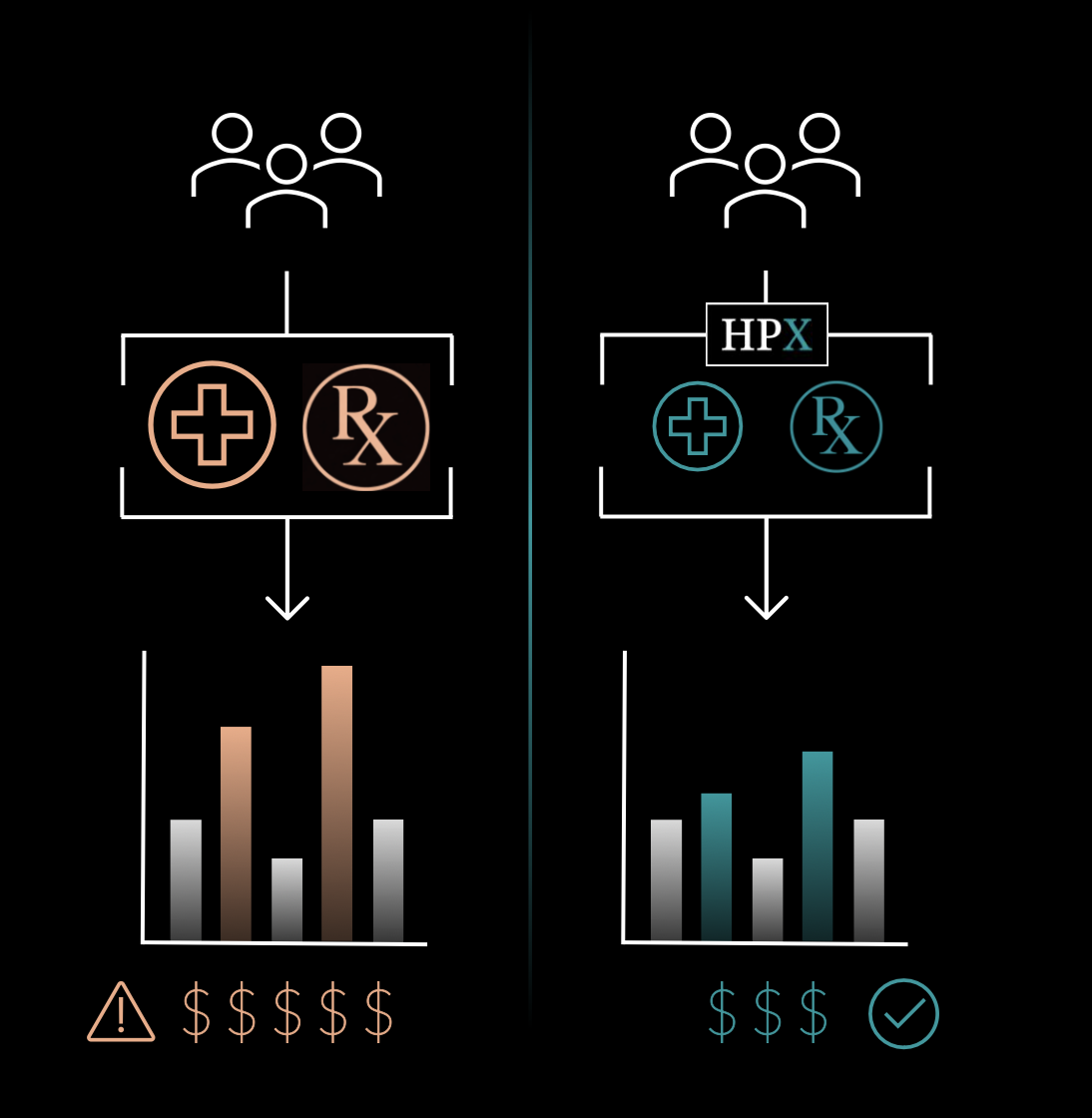
Every employer health plan performs two essential functions: purchasing healthcare and financing healthcare risk. Conventional insurance models attempt to solve both with a single bundled product.
HPX separates those disciplines. We first engineer the healthcare purchasing strategy to improve the underlying economics of the plan. Once those fundamentals have been optimized, we structure the most efficient risk financing arrangement to support it.
Built for measurable performance.
Optimizing healthcare begins with independently evaluating provider access, pharmacy benefits, and claim administration to create the strongest possible claim economics.
Once the healthcare purchasing system has been engineered for measurable performance, we structure the appropriate risk financing strategy using scalable purchasing pools and institutional underwriting solutions that improve funding efficiency and long-term stability.
Don’t compare quotes.
Solve for pricing efficiency.
OUR PROCESS ________
________
OUR PROCESS
Don’t compare quotes.
Solve for X.
Every employer health plan is the intersection of two systems: healthcare purchasing and risk financing. Sustainable improvement comes from intentionally optimizing both, not simply replacing one insurance product with another.
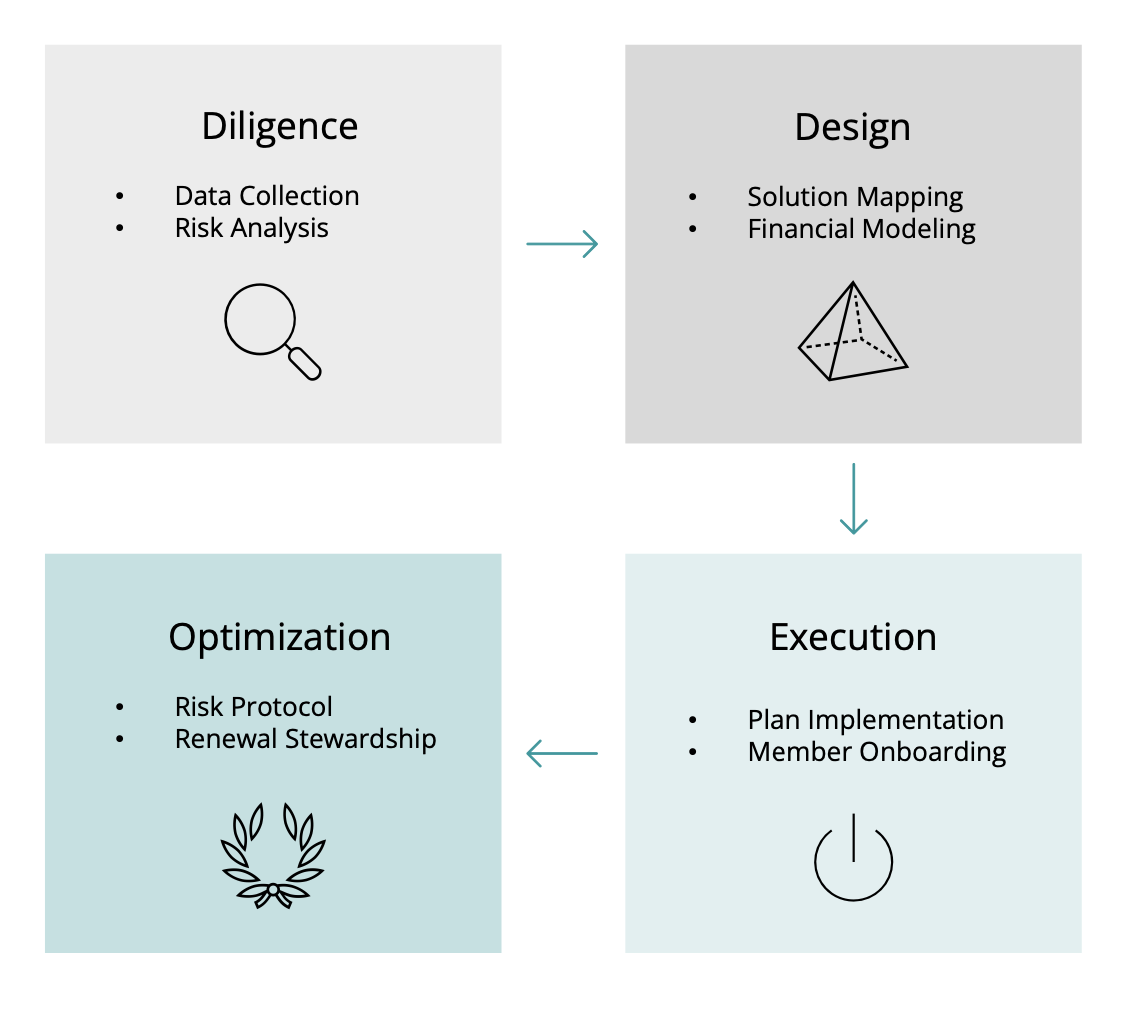
Our process begins with diligence and discovery, where we evaluate the current operating model, identify structural inefficiencies, and establish measurable performance objectives. We then design and implement a modern health plan architecture by aligning specialized partners across each core function of the plan.
Following implementation, HPX provides ongoing analytics, governance, and risk management oversight to continuously optimize plan performance. The result is a health plan that evolves with the healthcare marketplace rather than reacting to it upon each renewal cycle.

Plan Profile: 140 employees; $2.1M plan fund.
Problem: Rising prescription drug costs.
Solution: Independent pharmacy benefit manager.
Outcome: $350K annual plan savings.
Read Case Study
Plan Profile: 100 employees; $1.3M plan fund.
Problem: Forfeiture of claims surplus to carrier.
Solution: Strategic risk financing arrangement.
Outcome: $120K annual plan savings.
Read Case Study
Plan Profile: 210 employees; $3.5M plan fund.
Problem: Excess chemotherapy reimbursement.
Solution: High-performance third-party administration.
Outcome: $400K annual plan savings.
Read Case Study
Plan Profile: 180 employees; $2.6M plan fund.
Problem: Network and coverage restrictions.
Solution: Independent third-party administration.
Outcome: Unrestricted patient healthcare navigation.
Read Case Study
Plan Profile: 150 employees; $2.5M plan fund.
Problem: Rising provider and facility reimbursements.
Solution: High-performance medical network contract.
Outcome: $180K annual plan savings.
Read Case Study
Plan Profile: 570 employees; $13M plan fund.
Problem: Inefficient and opaque claim funding.
Solution: Efficient and transparent risk financing.
Outcome: $1.4M annual plan savings.
Read Case Study
Plan Profile: 160 employees; $2.1M plan fund.
Problem: Prescription drug rebate waste.
Solution: Independent pharmacy benefit manager.
Outcome: $250K annual plan savings.
Read Case Study
Plan Profile: 70 employees; $1M plan fund.
Problem: Insufficient population risk scale.
Solution: Group-purchased risk financing.
Outcome: $120K annual plan savings.
Read Case Study
Plan Profile: 140 employees; $2.1M plan fund.
Problem: Rising prescription drug costs.
Solution: Independent pharmacy benefit manager.
Outcome: $350K annual plan savings.
Read Case Study
Plan Profile: 100 employees; $1.3M plan fund.
Problem: Forfeiture of claims surplus to carrier.
Solution: Strategic risk financing arrangement.
Outcome: $120K annual plan savings.
Read Case StudyCASE STUDIES ________
________
CASE STUDIES
Plan Profile: 210 employees; $3.5M plan fund.
Problem: Excess chemotherapy reimbursement.
Solution: High-performance third-party administration.
Outcome: $400K annual plan savings.
Plan Profile: 140 employees; $2.1M plan fund.
Problem: Rising prescription drug costs.
Solution: Independent pharmacy benefit manager.
Outcome: $350K annual plan savings.
Plan Profile: 180 employees; $2.6M plan fund.
Problem: Network and coverage restrictions.
Solution: Independent third-party administration.
Outcome: Unrestricted patient healthcare navigation.
Plan Profile: 150 employees; $2.5M plan fund.
Problem: Rising provider and facility reimbursements.
Solution: High-performance medical network contract.
Outcome: $180K annual plan savings.
Plan Profile: 570 employees; $13M plan fund.
Problem: Inefficient and opaque claim funding.
Solution: Efficient and transparent risk financing.
Outcome: $1.4M annual plan savings.
Plan Profile: 160 employees; $2.1M plan fund.
Problem: Prescription drug rebate waste.
Solution: Independent pharmacy benefit manager.
Outcome: $250K annual plan savings.
Plan Profile: 70 employees; $1M plan fund.
Problem: Insufficient population risk scale.
Solution: Group-purchased risk financing.
Outcome: $120K annual plan savings.
Plan Profile: 100 employees; $1.3M plan fund.
Problem: Forfeiture of claims surplus to carrier.
Solution: Strategic risk financing arrangement.
Outcome: $120K annual plan savings.
________
NEWS AND INSIGHTS
NEWS AND INSIGHTS ________

The headlines shaping employer-sponsored healthcare.

Field notes from HPX Founder and CEO, Matt Luciani.